


The short answer
Most range hood problems come from a worn blower motor, a failed control board or switch, clogged filters, a bad light circuit, or a damper or duct issue. A technician can usually find the cause in one visit and replace the failed part without removing the hood from your cabinetry.
A range hood is easy to ignore until it stops pulling smoke, starts rattling, or the lights and controls quit. On a professional-style range or a high-output cooktop, a hood that isn't venting properly lets grease, heat, and cooking odors settle into your cabinets and ceiling. Wolf Repair Experts is an independent repair company in Woodland Hills that works on premium kitchen ventilation, including Wolf, Viking, and Thermador hoods, downdrafts, and liner inserts. Many of the kitchens we visit also have Sub-Zero refrigeration, and we service that too. Below is what goes wrong with hoods, what we check, how the brands differ, and how a visit works.
Issues we fix
These are the symptoms homeowners call us about most often. Several can share the same cause, so it helps to tell us exactly what you notice and when it happens.
- Weak suction: smoke and steam drift past the hood instead of being pulled in
- Blower won't start, or runs on some speeds but not others
- Loud humming, grinding, rattling, or a whine that gets worse over time
- Fan won't shut off, or turns on by itself
- Lights out, flickering, or working only intermittently
- Touch controls or buttons that don't respond, or a heat sensor that triggers the fan at the wrong time
- Downdraft vent that won't rise, stalls partway, or won't retract
- Grease dripping from the hood or baffle filters
- Backdraft: cold air or outdoor odors coming in when the hood is off
What our technician checks on a built-in or professional-style hood
We start with the basics, because they're common and quick to rule out. Heavily loaded baffle or mesh filters restrict airflow enough to mimic a failing motor, and we check the grease trough and filter seating while we're there.
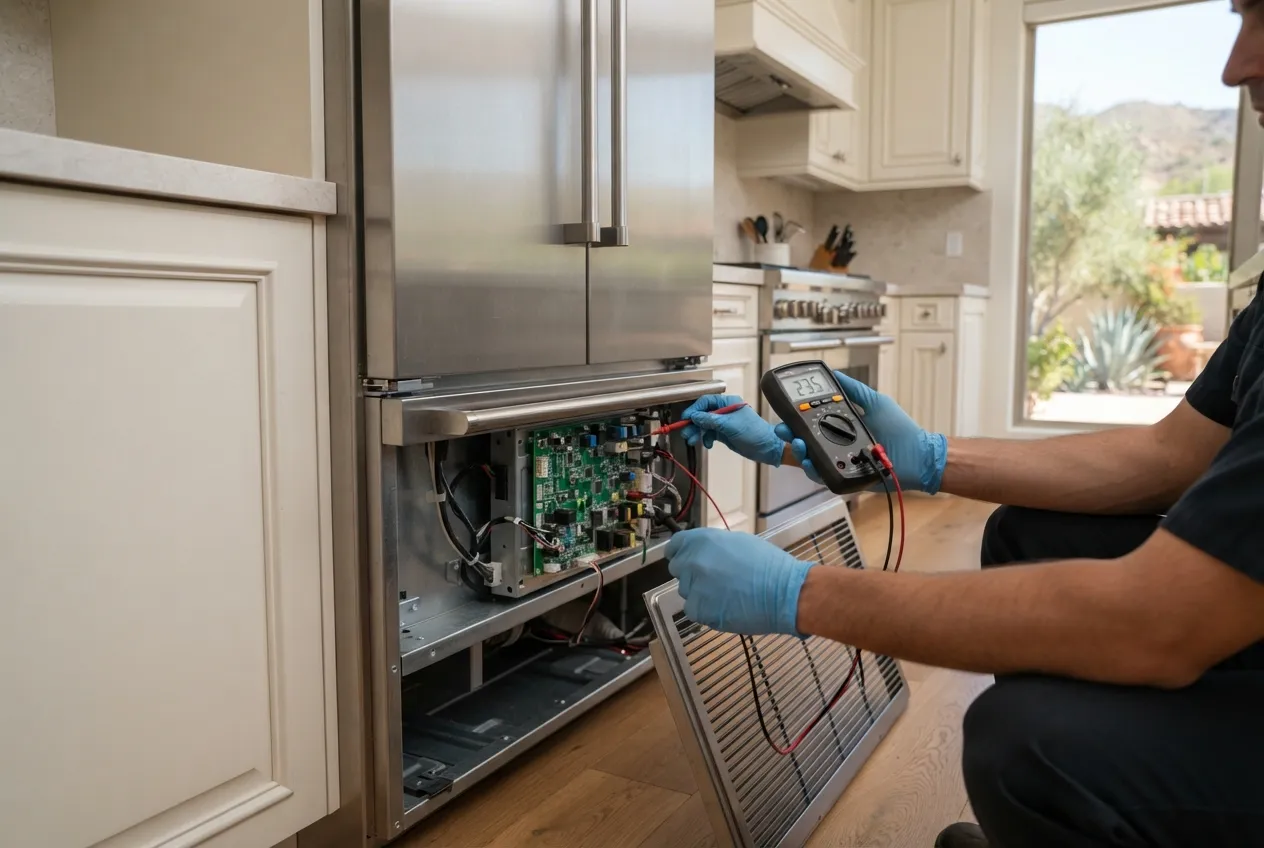
From there we test the blower. That includes listening for bearing noise, checking the blower wheel for grease buildup or damage, measuring voltage at the motor, and confirming the speed control or control board is sending the right signal on each setting. Many premium hoods use a separate control board, and some use an in-line or remote-mounted blower in the attic or on the roof, so we trace the wiring to wherever the motor actually sits.
We also look at the parts most people never see: the backdraft damper, which can stick open or shut; the duct transition, which can come loose or be undersized for the blower; and the light sockets, transformers, or LED drivers. On downdraft units we check the lift motor, gears, limit switches, and the track for debris or misalignment.
How Wolf, Sub-Zero, Viking, and Thermador compare
Wolf makes pro-style wall and island hoods, ventilation inserts for custom hoods, and downdraft systems that pair with its cooktops and rangetops. On Wolf ventilation we often see control and switch problems, blower wear in kitchens that cook at high heat, and downdraft lift mechanisms that slow down or stall. Sub-Zero builds refrigeration rather than hoods, but because Sub-Zero and Wolf appliances are so often installed together, we can look at both on the same visit if you need it.
Viking hoods are typically heavy stainless pro-style units built to sit over high-output ranges. Common calls involve blower motors and capacitors, worn speed switches, and light circuits. Some Viking installations use remote blowers, which shifts where the noise and the failure actually are.
Thermador offers wall and island hoods, custom inserts, and downdraft ventilation. We regularly see electronic control issues, heat-sensor behavior, and downdraft travel problems. Exact failures vary by model and age, so we diagnose the specific unit instead of assuming.
Tell us what your appliance is doing.
Repair or replace a high-end range hood
Repair is usually the sensible choice for a premium hood. The housing, liner, and stainless shell rarely wear out; what fails are motors, boards, switches, lights, and dampers, which can generally be replaced. A hood built into custom cabinetry or a plaster or wood surround is often sized to that space, so replacing it can mean carpentry and finish work on top of the new unit.
Replacement makes more sense when the hood is badly corroded, when key parts are no longer available, when several major components have failed at once, or when you want more capture area or airflow than the current hood can deliver. We'll tell you plainly which situation you're in.
What affects the cost of a range hood repair
We don't quote over the phone, because the price depends on what we find. The main factors are the fault itself, the parts involved, and access. A light driver or switch is a different job from a blower motor or a downdraft lift assembly, and parts for some models are easier to get than others.
Access matters more than people expect. A liner insert hidden inside a custom wood hood, a remote blower in an attic, or a downdraft tucked behind drawers in an island takes more time to reach than a standard wall hood. We explain the diagnosis and the repair cost before any work begins, and you decide whether to proceed.
How a service visit works
When you contact us, we'll ask for the brand, model if you have it, the type of hood, and the symptoms. Photos of the model tag, usually found behind the filters, help us arrive prepared.
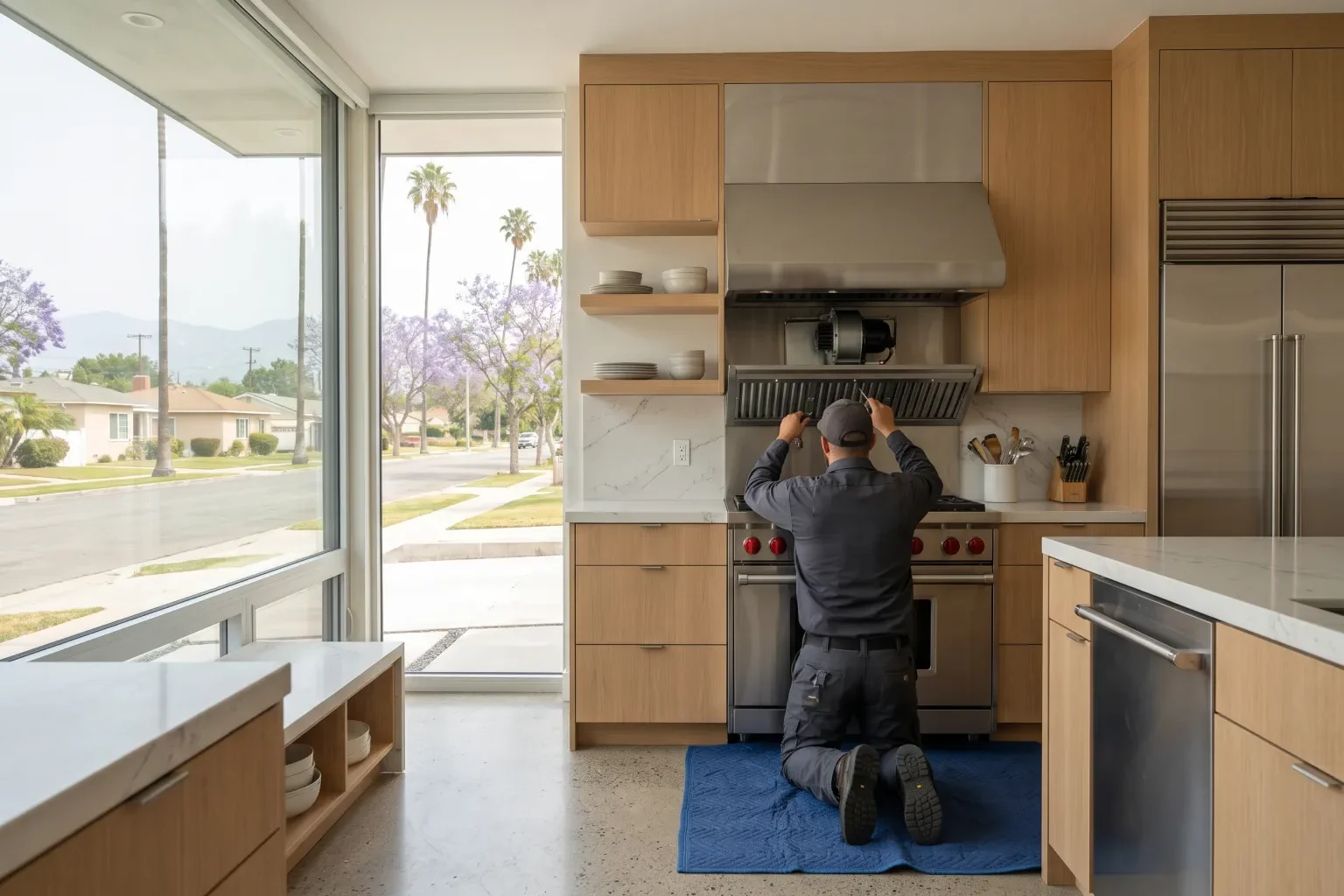
At the visit, the technician protects your cooktop and counters, removes the filters, and works through the diagnosis described above. If the needed part is on the truck, we can often finish the same day. If it has to be ordered, we schedule a return visit once it arrives. Before we leave, we run the hood on every speed, check the lights and controls, and point out any filter or cleaning habits that will help it last.