


The short answer
Most freezer problems in high-end built-in units come from a short list of causes: dirty condensers, failed fans, defrost faults, worn door seals, ice maker trouble and control errors. These are usually repairable. Our technician diagnoses the cause on site, explains whether repair makes sense for your model, and gives you a clear picture before starting work.
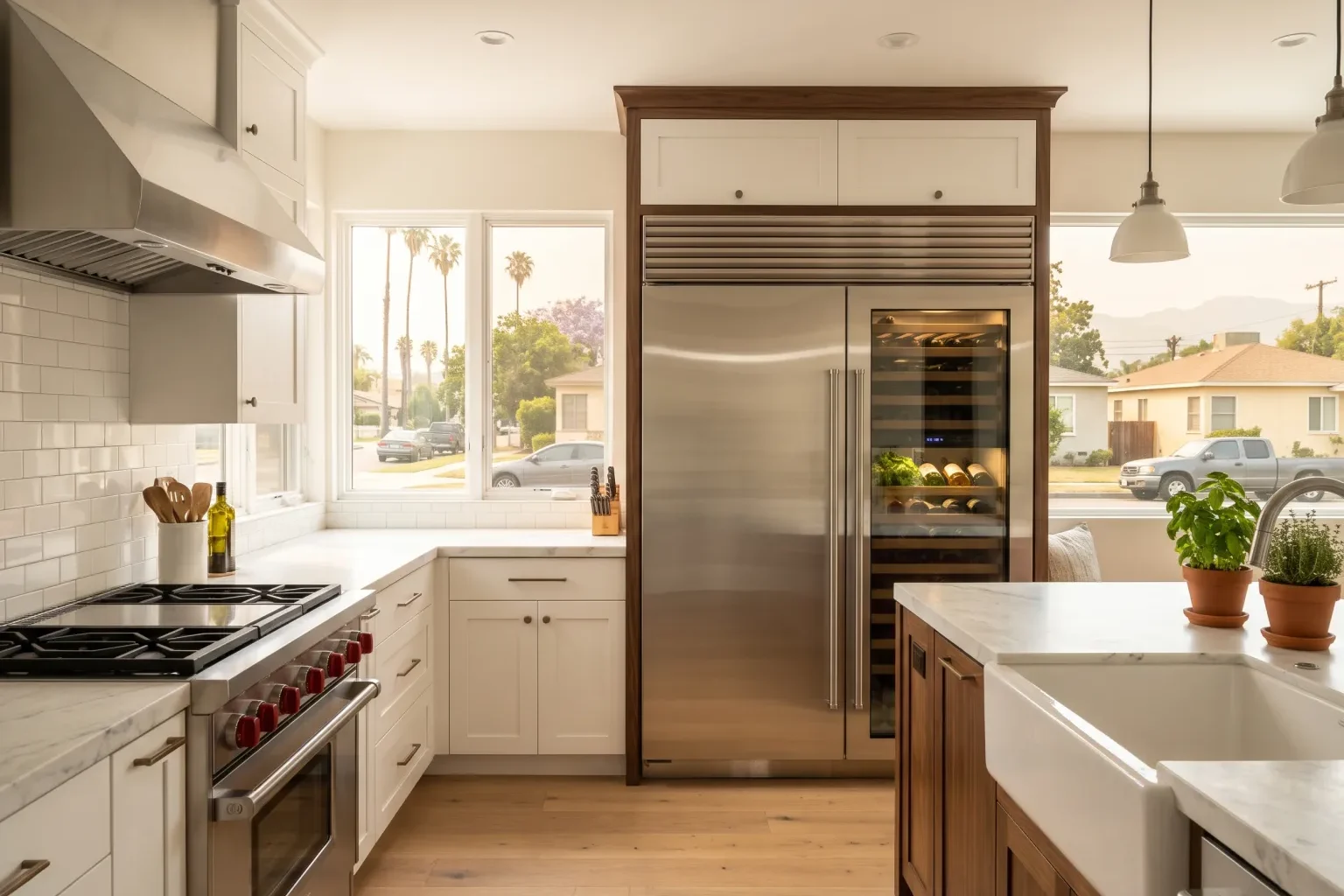
A freezer that drifts warm, frosts over, or stops making ice puts food at risk within hours. In a built-in kitchen, the fix also has to respect custom panels and tight cabinetry. Wolf Repair Experts repairs freezers in premium kitchens across Woodland Hills and nearby communities like Calabasas, Tarzana, Encino, West Hills and Canoga Park. Wolf is known for cooking equipment, and the column freezer, freezer drawers or bottom-freezer refrigerator next to a Wolf range is often a Sub-Zero. We also work on Viking and Thermador freezers. We are an independent repair company, not affiliated with any of these brands. We diagnose the actual fault and explain your options before any work begins.
Issues we fix
Freezer problems often start small, like a softer ice cream carton or a little frost on the back wall. They tend to get worse quickly. If you notice any of the following, it is worth a call before the unit fails completely.
- Freezer not cold enough, or temperatures that swing during the day
- Frost or ice build-up on the back panel, shelves or around the door
- Ice maker not producing, producing small or hollow cubes, or leaking
- Water pooling under the unit or ice forming on the floor of the freezer
- Error codes, flashing displays or a temperature alarm that won't clear
- Compressor running constantly, clicking on and off, or not starting
- New noises: buzzing, rattling, grinding or a fan that ticks against ice
- Door that won't seal, swings shut unevenly or has a torn gasket
- Freezer drawers that stick, sag or don't close fully
What our technician checks on a built-in or professional-style freezer
Built-in freezers are designed to sit flush in cabinetry, so the condenser, fans and controls are packed into tight spaces, often in a grille area at the top or bottom. We start by confirming the actual temperatures and reading any stored error codes. Then we work through the system in order rather than guessing at parts.
That means inspecting and cleaning the condenser coil and checking the condenser and evaporator fans. We test the defrost heater, defrost thermostat or sensor, and the control board. We also look at the drain path, door gaskets, hinges and door closers, along with the ice maker, water valve and supply line. If those check out, we look at the sealed system: compressor operation and signs of a refrigerant leak or restriction.
Heat matters here. The San Fernando Valley runs much hotter in summer than areas near the coast, and fall Santa Ana winds bring hot, dry spells. A condenser clogged with dust works harder in that heat, so a cleaning and airflow check is part of every visit.
How Sub-Zero, Viking, Wolf and Thermador freezers differ
Wolf itself focuses on ranges, ovens and cooktops. In Wolf kitchens, the matching freezer is usually from Sub-Zero, and we service the whole suite, so one visit can cover the freezer and a Wolf cooking appliance if both need attention.
Sub-Zero freezers come in columns, built-in combinations and undercounter drawers. On these units we commonly see condensers that need cleaning, ice maker and water valve problems, evaporator fan issues and door gaskets worn by heavy custom panels. Drawer models can develop slide and alignment problems.
Viking built-in freezers often come to us with defrost-related frost build-up, ice maker faults and door alignment issues, especially when panels have shifted over time.
Thermador column freezers rely heavily on electronic controls. Typical calls involve control or sensor faults, ice maker problems and fan issues.
These are tendencies, not rules. Your unit's age and history matter more than the badge, which is why we diagnose before recommending parts.
Tell us what your appliance is doing.
Repair or replace a high-end freezer?
Premium built-in freezers are built to be repaired, and replacing one is rarely simple. A new unit has to match the cutout, the panels and often a paired refrigerator. Fans, sensors, defrost parts, gaskets, ice makers and control boards are routine repairs, and fixing them usually costs far less, with far less disruption, than replacement.
Replacement deserves a closer look when the sealed system has failed on an older unit, when the cabinet or liner is cracked, or when key parts are no longer available. We'll tell you plainly which situation you are in, and the decision is yours.
What affects the cost of a freezer repair
We don't quote prices before we have seen the unit, because three things drive the cost and they vary widely. The first is the fault itself. Cleaning a condenser or replacing a fan is a very different job from a sealed-system repair. The second is parts: some components are stocked widely, while others are model-specific and take time to source. The third is access. A freestanding unit is easy to reach. A fully integrated column in custom cabinetry may need panels removed or the unit carefully pulled out.
After diagnosis, we explain the repair and the parts involved so you can decide with full information.
How a freezer repair visit works
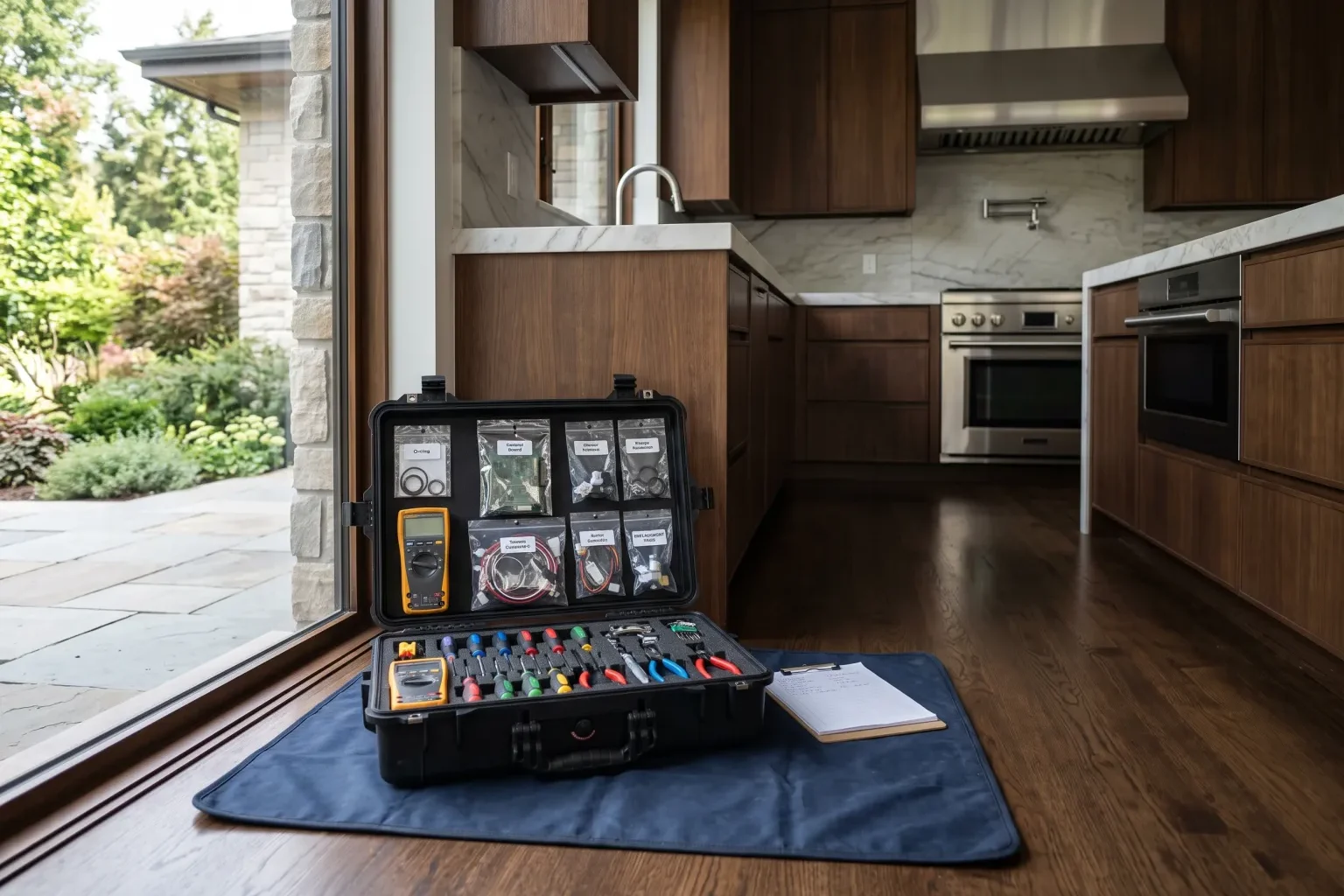
When you contact us, we ask for the brand, the model if you have it, and what you are seeing. That helps the technician arrive prepared. On site, we protect your floors and cabinetry, diagnose the fault and walk you through what we found.
If we have the part, we can often complete the repair the same visit. If a model-specific part has to be ordered, we schedule a return visit. Meanwhile, we'll suggest ways to protect your food, such as moving items to the refrigerator section or a cooler. Before leaving, we confirm the freezer is pulling down to temperature and show you any simple upkeep, like keeping the grille clear.