


The short answer
Most outdoor grill problems, such as burners that won't ignite, weak or uneven flames, or a dead sear burner, can be repaired by replacing a specific part like an igniter, valve, or regulator. Replacing the whole grill rarely makes sense unless the firebox or body has corroded through or parts are no longer available.
A built-in grill is often the center of an outdoor kitchen, so it's frustrating when a burner won't light or one side of the grate never gets hot. Wolf Repair Experts repairs premium outdoor grills and the cooking and refrigeration equipment around them for homeowners in Woodland Hills, Calabasas, Tarzana, West Hills, Encino, and nearby communities. We lead with Wolf, and we also work on Viking grills, Sub-Zero outdoor refrigeration, and Thermador cooking equipment. We are an independent repair company, not affiliated with or endorsed by any of these brands. Our goal on every visit is to find the actual cause, explain it plainly, and give you a clear choice before any work begins.
Issues we fix
These are the symptoms homeowners mention most often. If you smell gas at any point, turn off the supply at the tank or shutoff valve, don't try to light the grill, and call your gas utility before calling us.
- Burners that won't ignite, or an igniter that clicks without sparking
- Spark at the electrode but no flame, or a flame that goes out when you let go of the knob
- Weak, yellow, or lazy flames instead of a steady blue flame
- Uneven heat, with hot and cold zones across the grate
- Infrared sear burner that won't glow or heats slowly
- Rotisserie burner or rotisserie motor not working
- Knobs that are stiff, loose, or turn without changing the flame
- Excessive flare-ups or grease fires from a clogged grease management system
- Grill lights or electronic ignition that stopped working
- Temperature gauge that reads wrong or not at all
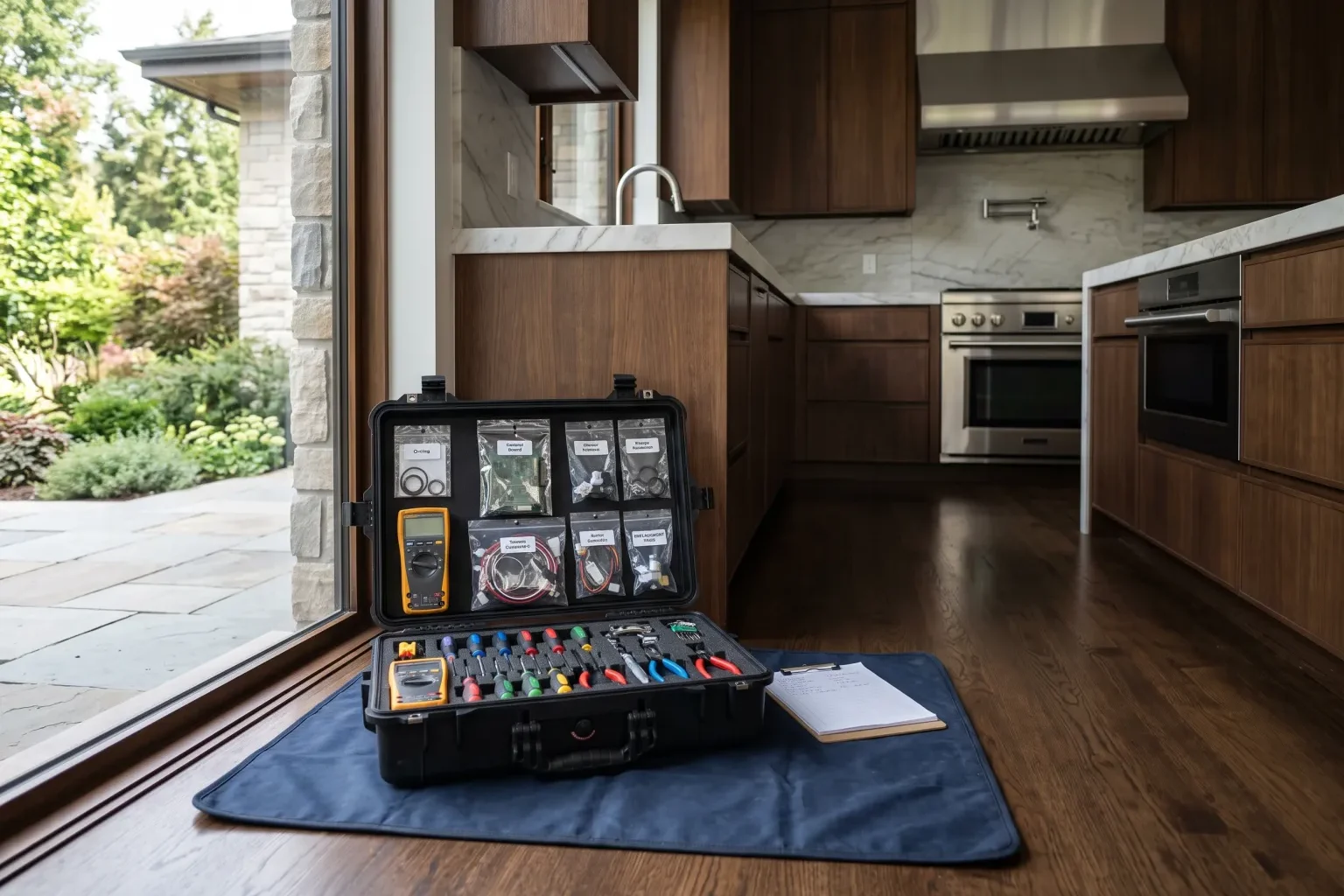
What our technician checks on a built-in or professional-style grill
We start with the gas supply, because many burner complaints begin there. The technician confirms the fuel type matches the grill's setup, checks the regulator and supply line, and looks for kinks, leaks, or a regulator that has gone into low-flow mode. Connections get a leak test before and after any repair.
Next comes the ignition system: electrodes, wiring, the spark module, and the battery or power supply on electronic models. Then we inspect each burner for blocked ports, cracks, and spider or insect nests in the venturi tubes, a common cause of yellow flames and backfiring on grills that sit unused for a few weeks. We also check the valves, thermocouples or flame safety devices, the sear burner, rotisserie components, and the grease tray and drip system.
Finally, we look at how the grill sits in its island. Poor ventilation in the enclosure, blocked vent openings, or heat damage to nearby components can cause repeat failures, and we'll point that out if we see it.
How Wolf, Viking, Sub-Zero, and Thermador equipment differs
Wolf outdoor grills are built-in and freestanding gas units, many with an infrared sear burner and rotisserie. The calls we see most involve igniters, sear burner elements, and valves that stiffen over time. Viking outdoor grills have a long track record in outdoor kitchens; on older units, burner corrosion, worn igniters, and regulator problems come up more often.
Sub-Zero doesn't make grills, but its outdoor refrigerators and beverage units often sit right beside one. Heat from the grill and our hot Valley summers make condenser airflow and door seals more important, and we service those units on the same visit when needed. Thermador is best known for indoor ranges and rangetops, some configured with a griddle; if your outdoor kitchen is tied into a covered patio with Thermador cooking equipment, we can look at that too.
Tell us what your appliance is doing.
Repair or replace a high-end grill?
On a premium grill, the stainless body, firebox, and grates usually outlast the parts that wear out. Igniters, electrodes, valves, regulators, thermocouples, and burners are designed to be serviced, so replacing them typically makes more sense than replacing a grill that is otherwise sound. A built-in grill is also sized to its cutout, and a new model may not fit the existing island without cabinetry or masonry work.
Replacement is worth considering when the firebox or burner housing has rusted through, when the grill has suffered serious fire or heat damage, or when key parts are discontinued and no suitable substitute exists. We'll tell you directly which situation you're in.
What affects the cost of an outdoor grill repair
We don't quote over the phone without seeing the grill, because the same symptom can have very different causes. A grill that won't light might need a battery, an electrode, or a new valve assembly. These are the main factors:
- The actual fault and how many components are involved
- Part cost and availability, especially for older or discontinued models
- Access: grills set deep in custom stone or tile islands may need to be lifted or partially removed to reach gas lines and valves
- Whether the gas supply, regulator, or enclosure ventilation also needs attention
- Condition of surrounding parts, such as corroded fasteners that have to be cut and replaced
How a visit works
When you contact us, we'll ask for the brand, model number if you can find it (often on a tag under the drip tray or inside the cart door), the fuel type, and what you're seeing. That helps the technician arrive with likely parts.
On site, the technician runs through the diagnostic checks above, explains what failed and why, and gives you your options before any repair starts. If a part needs to be ordered, we'll schedule a return visit. After the repair, we test every burner, check for leaks, and walk you through anything you can do to prevent a repeat, such as covering the grill or clearing the burner tubes before the first cook of the season.